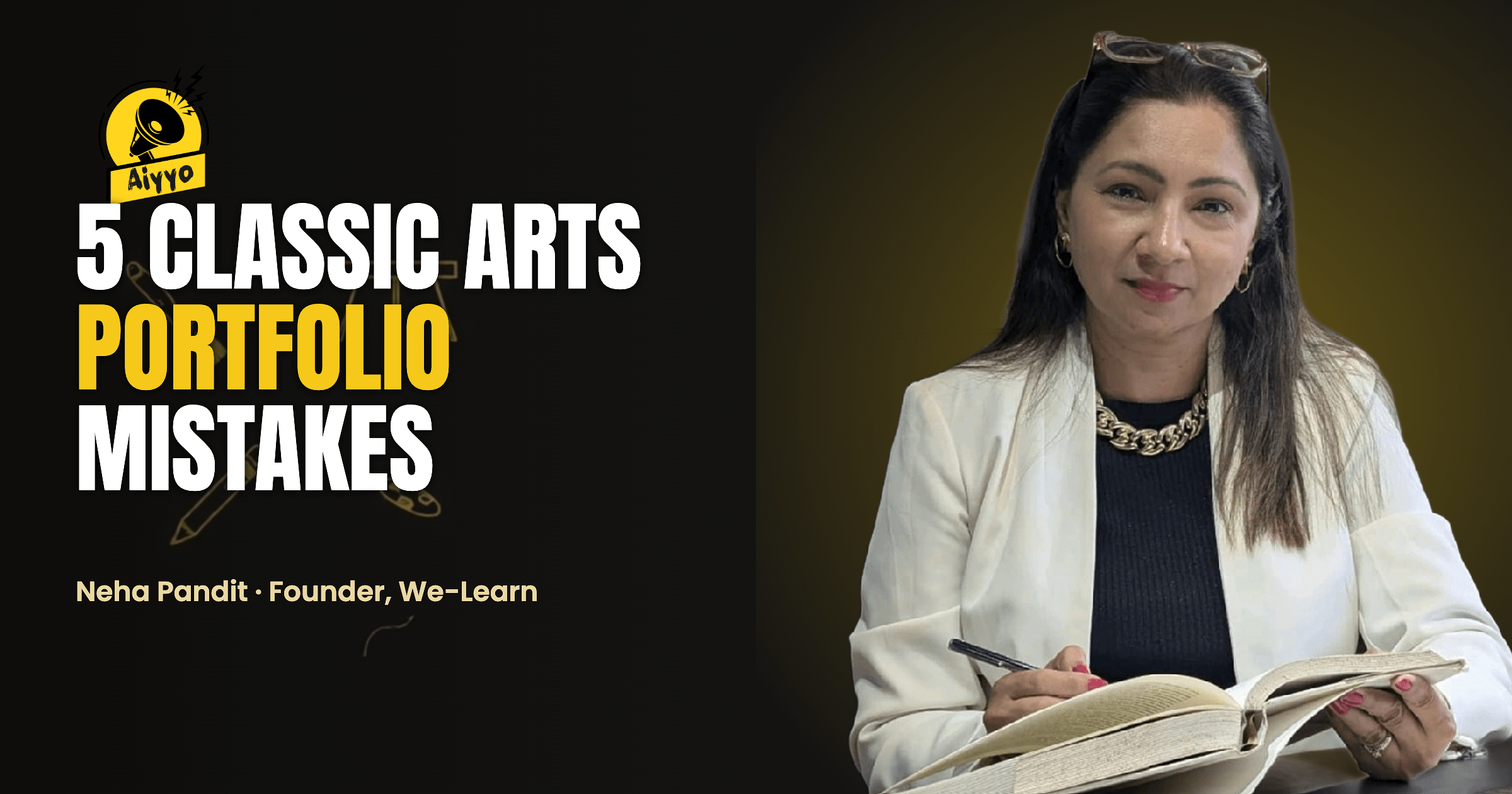
5 Classic Arts Portfolio Mistakes
Artistry Unveiled: 5 Critical Mistakes to Avoid in Your Art Portfolio

As an art student, a portfolio is the most important documentation of their creative journey. Their creative expressions are formed by their own life experiences, influences and interpretations. So, in a sense it is equivalent to a thumb print, and for an art student this could be a gamechanger in their college admissions.
While the path itself can be challenging, these tips can exponentially increase the student's chances of getting into the college of their dreams.
Time
Students often completely prioritize their academic commitments over the development of their art portfolio and plans to execute at the last lapse of their high school years. However, a portfolio is a long journey through which a learner shows progression of their own artistic growth. A fast-tracked portfolio tends to lack the in-depth, intense, and detailed body of artworks.
While some students start as early as in grade 9/10, the perfect day to start is the day the student realizes that their interests lie in pursuing art.
Approach
In today's time, with ideas, archives, exemplars being so easily available, students are prone to transcribe what they see. They fail to realize, that the same resources are available to their peers too. So, in the process of transcribing work, and editing it a little to give it a fresh look, the admission officers do not see any original artwork.
A portfolio is an individual documented body of artworks, so it must be unique to one's personality and the stream which it has been applied for.
Versatility—Media, medium and material
It is common for art students to have their favourite medium, which is generally their strongest medium to render, and are hesitant to show their works in other mediums. This gives their portfolio a monotonous look, and will not appeal to the admission officer.
The art portfolios need to show diversity in terms of using of media, medium and materials. This approach, displays the students as a risk taker, open minded, innovative, and will tempt the admission officer to go on the next slide
Review, refine, reflect
Art portfolios are not meant to show the direct images of a completed artworks. These images give no background to the admission officer of the processes that have gone behind in the creating of the works.
Consequently, it is important to show the process of how the artworks were reviewed after completion, then refined and improvised and thus taking the journey to reflect through the curatorial rationale. The descriptions give an insight to the viewer of the intention of the student.
Presentation
Students tend to opt for one of the first few presentation templates available, which shows a lack of enthusiasm, and this requires more attention.
The presentation is a vital part of the portfolio as it ties together the entire body of work. Each artwork needs to be photographed based on the concept and production value. The colour scheme, fonts and layout of the presentation can be aligned to the art stream applied for. Also, as colleges can have different requirement for submission, it is important to keep different compatible versions ready for uploads.
Through this entire journey, the student needs to remember, that their art will evolve and grow, and often face challenges. But, the process to work around it, and creating something even better, is truly art!