AI & Your Teen’s Mental Health
Preparing Teens to Think, Persevere, and Thrive Beyond the Algorithm
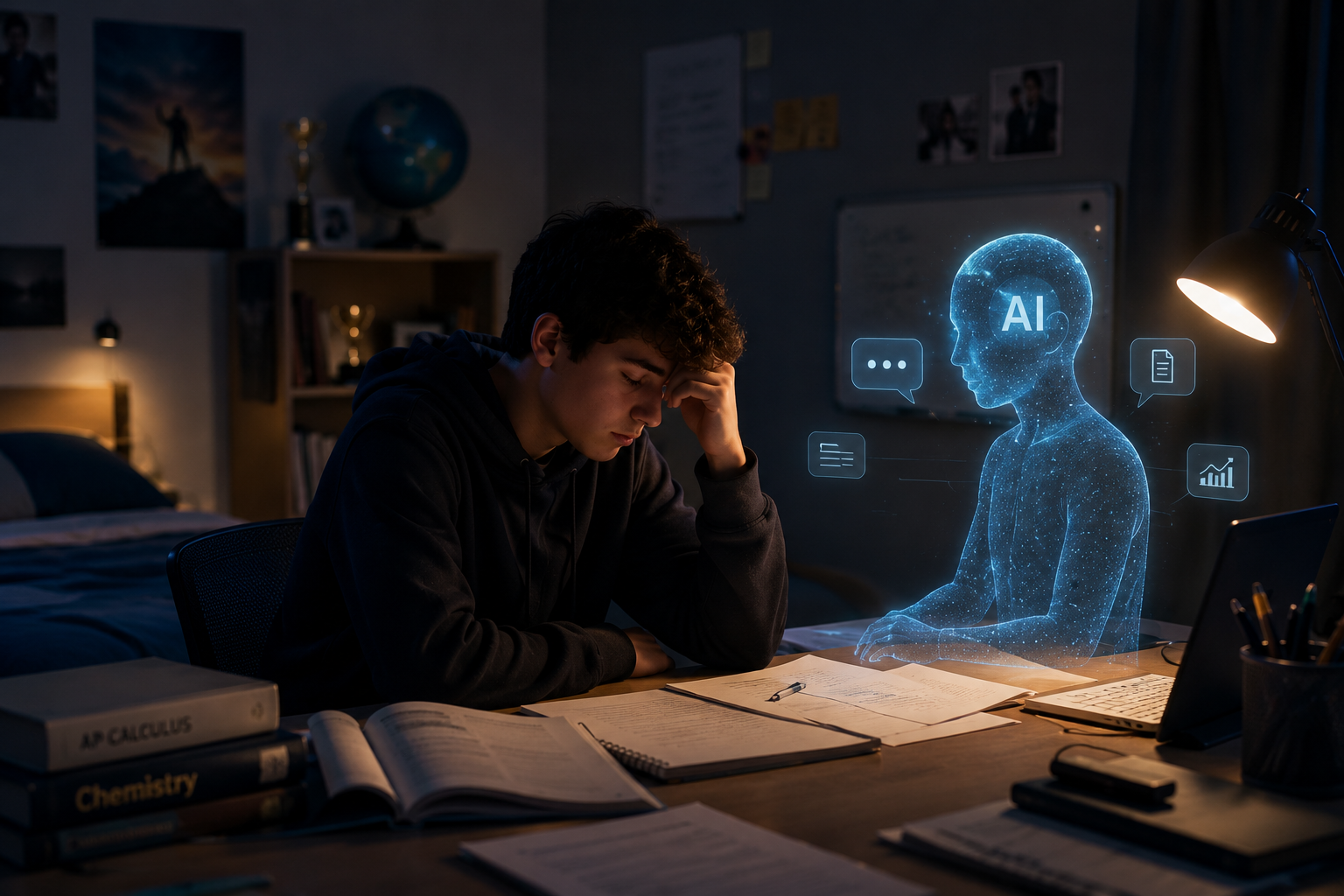
For today's teenagers, AI is becoming a constant presence in academic work and daily life. A student struggling with a homework problem can receive an instant solution. A difficult essay can be drafted in seconds. A research question can be answered immediately. While these capabilities offer obvious benefits, they may also influence how young people develop confidence, resilience, and independence.
1 - Declining Productive Struggle & Grit
Adolescence is a period during which young people learn how to persevere through difficulty. Whether solving a mathematics problem, writing a paper, or learning a new skill, the process of struggling, making mistakes, and eventually succeeding builds confidence. When AI consistently removes friction from learning, some students may miss opportunities to develop the mental toughness that comes from overcoming challenges on their own. Parents may notice subtle signs of this shift. A teenager who once experimented with different solutions may now seek the fastest answer. A student who encounters a difficult assignment may become uncomfortable working through uncertainty without technological assistance. Over time, reliance on AI can create a hidden vulnerability: confidence in the tool grows while confidence in one's own abilities may stagnate.
2 - Focus & Deep Work
AI will affect attention and concentration. Many AI systems provide instant responses to questions that previously required sustained effort and research. Teenagers are growing up in an environment where answers arrive almost immediately. As a result, some may become less comfortable with slow, deliberate thinking, the kind required for deep reading, complex problem-solving, and thoughtful decision-making. Patience, increasingly, is becoming a skill that must be intentionally developed.
3 - Emotional Dependency
AI chatbots are becoming more conversational, supportive, and personalized. For some teenagers, particularly those experiencing loneliness or social anxiety, these systems can feel easier to engage with than real people. Unlike friends, teachers, or parents, AI does not disagree, challenge assumptions, or require emotional reciprocity. While AI can provide useful support, healthy emotional development still depends on navigating the complexities of real human relationships.
4 - Career Anxiety
Teenagers today are hearing constant predictions about automation, changing industries, and jobs that may look very different within a decade. Even highly capable students can feel anxious when they are repeatedly told that technology may transform the careers they are considering. The result is not necessarily fear of AI itself, but a broader sense of instability about what adulthood may look like.
How Parents Can Approach This
The most mentally resilient young adults will not be those who avoid AI, nor those who rely on it for everything. They will be those who use technology as a tool while maintaining confidence in their own ability to think, adapt, learn, and build meaningful relationships. In an era increasingly shaped by artificial intelligence, those human capabilities may become more valuable than ever. Encourage activities that require persistence, teamwork, leadership, creativity, ethical judgment, and face-to-face communication. Support opportunities where teenagers must solve problems independently and experience occasional failure.