Careers in Ocean Space
The Broad Horizons of Maritime Operations and Engineering Careers

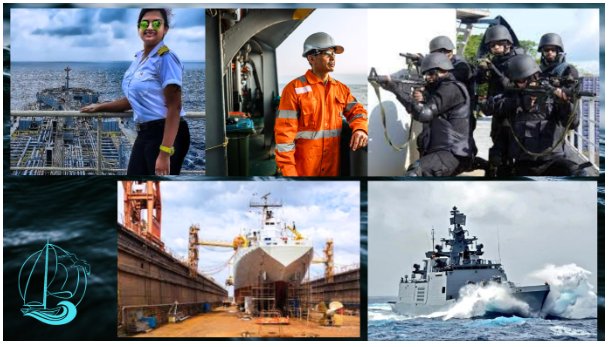
Stretching across 71% of the surface of Planet Earth, the maritime domain is the arena to a vast array of career opportunities, each with its unique challenges and rewards. In this first of a two-part series, will provide the four broad groups of vocations before seeking to examine Maritime Operations and Engineering, which encompasses a range of roles critical to the smooth functioning and safety of the maritime industry.
The dynamic and wide canvas of imperatives in the ocean space mean that the spectrum of essential learning and knowledge spans a wide spectrum. With almost 26 recognised career fields that aid in harnessing this theatre of the seas it becomes easier to look at it from four broad groups. These are (i) Maritime Operations and Engineering, (ii) Maritime Commerce and Management, (iii) Maritime Policy, Law, and Academia, as well as (iv) Ocean Sciences, Environment, and Conservation. Each group offers distinct pathways for individuals interested in different aspects of the maritime industry. A brief understanding of the later three groups follows before we dive deeper into the first.
- The Maritime Commerce and Management group encompasses careers that focus on the operational, logistical, and managerial aspects of the maritime industry.
- The Maritime Policy, Law, and Academia group involves careers that shape regulations, govern maritime operations, and contribute to the development of knowledge in the maritime domain.
- The Ocean Sciences, Environment, and Conservation group focuses on careers related to studying, preserving, and managing the marine environment.
Careers in Maritime Operations and Engineering
Representative of the more well known and long standing careers related to sea this is the set of vocations that remain the most popular choices. Thes focus on the operational and technical aspects of the maritime sector. Let's delve into the various career options within this group:
Merchant Navy: The Merchant Navy offers an exciting career working on commercial vessels, such as cargo ships, oil tankers, and passenger liners. It encompasses diverse roles such as Deck Officer (Navigation), Marine Engineer, and Electro-Technical Officer (ETO). Merchant Navy professionals are responsible for managing onboard ship operations, maintaining ship systems and equipment, and ensuring safe navigation. Once known as the fascinating and alluring story making jobs the Merchant Navy is today a highly professional gender diverse and global spectrum of engagement.
Indian Navy: For those interested in serving the nation, the Indian Navy provides a prestigious and rewarding career path. The Indian Navy offers a wide range of technical, non-technical, and executive roles, including Naval Architect, Pilot, Observer, and Logistics Officer. Joining the Indian Navy allows individuals to work with cutting-edge technology, develop leadership skills, and contribute to national security. As one of the three major armed forces the Indian Navy is a key to nation building and is set for a 21st century experience for those who choose it as a way of life.
Marine Engineering: Marine engineers play a crucial role in designing, constructing, and maintaining marine vehicles, systems, and equipment. They work in various sectors, including shipyards, shipping companies, and maritime research organizations. Marine engineers ensure the safe and efficient operation of ships and other marine vessels. The pathway to becoming a marine engineer is through dedicated marine engineering courses at government run and corporate funded institutions. General engineering students, especially mechanical and civil engineers have the option to transition through a bridge programme into the domains of marine engineering and ship construction.
Nautical Science: Professionals specialising in Nautical Science focus on the safe operation and navigation of ships. They work as Navigating Officers, Maritime Surveyors, or Vessel Traffic Service Officers. Nautical Science involves a deep understanding of navigation principles, ship handling techniques, and adherence to maritime regulations, making it a vital field in the maritime industry. A large populace of the professionals in Merchant Navy and Indian Navy often choose to transition into the numerous opportunities in the nautical sector.
Naval Architecture: Naval architects are responsible for designing, developing, and maintaining ships, submarines, and other marine vehicles. They work with the Indian Navy, shipyards, or private companies involved in ship design and construction. Naval architects combine their knowledge of engineering, hydrodynamics, and materials science to create innovative and efficient vessel designs. In addition to Naval Architecture degree programmes there is option for allied field specialists such as civil engineers, aeronautics, metallurgy and similar fields to transition into a career as naval architects.
Marine Safety and Security: Professionals in the field of marine safety and security ensure the smooth and secure operation of ships, ports, and other maritime facilities. They work as Safety Inspectors, Ship Security Officers, or Port Facility Security Officers for shipping companies, port authorities, or regulatory agencies. Marine safety and security professionals play a critical role in protecting lives, property, and the environment. As in the nautical science domain there is often a cross-movement from sailing fields of the Indian Navy and Mercantile Marine into the safety and security careers.
Educational Requirements and Prerequisites
To pursue careers in maritime operations and engineering, specific educational requirements and prerequisites are essential. Aspiring individuals should consider pursuing the Science stream in high school, focusing on subjects such as Physics, Chemistry, and Mathematics. This foundation will provide the necessary knowledge and skills for higher education in fields such as Marine Engineering, Nautical Science, or Naval Architecture. Additionally, gaining practical experience through internships or vocational training programs can greatly enhance career prospects in the maritime operations and engineering field.
The Maritime Operations and Engineering group offers a wide range of exciting and fulfilling career opportunities within the maritime industry. Whether it's working on commercial vessels, designing innovative ship structures, or ensuring the safety and security of maritime operations, professionals in this group play a vital role in the functioning of the maritime sector.
Do explore the diverse opportunities available in the maritime industry and consider the path that aligns with your interests, aptitudes, and aspirations. Remember, this article only scratches the surface of the vast maritime domain. To gain a deeper understanding of the field and its professional growth opportunities, we encourage you to connect with experienced professionals in the maritime industry or seek guidance from qualified marine career advisors. It is vital to gain valuable insights, gather practical advice, and develop a more comprehensive understanding of the maritime domain and its numerous career possibilities. Look at guidance tailored to your specific interests and aspirations, helping you navigate the path towards a successful and fulfilling career in the ocean space.
It has been my honour and joy to have begun in November 1982 my pre-sea training onboard Training Ship Rajendra, sailed with Shipping Corporation of India as a Nautical Trainee from 1983 to 1986 and served in the Indian Navy from 1987 to 2021. Reach out for more at ceo@johnsonodakkal.com In Part 2 of this series we will examine the other three groups of career opportunities in the maritime domain.