Crazy Rich Admissions
Eight Admissions Trends On My Watchlist
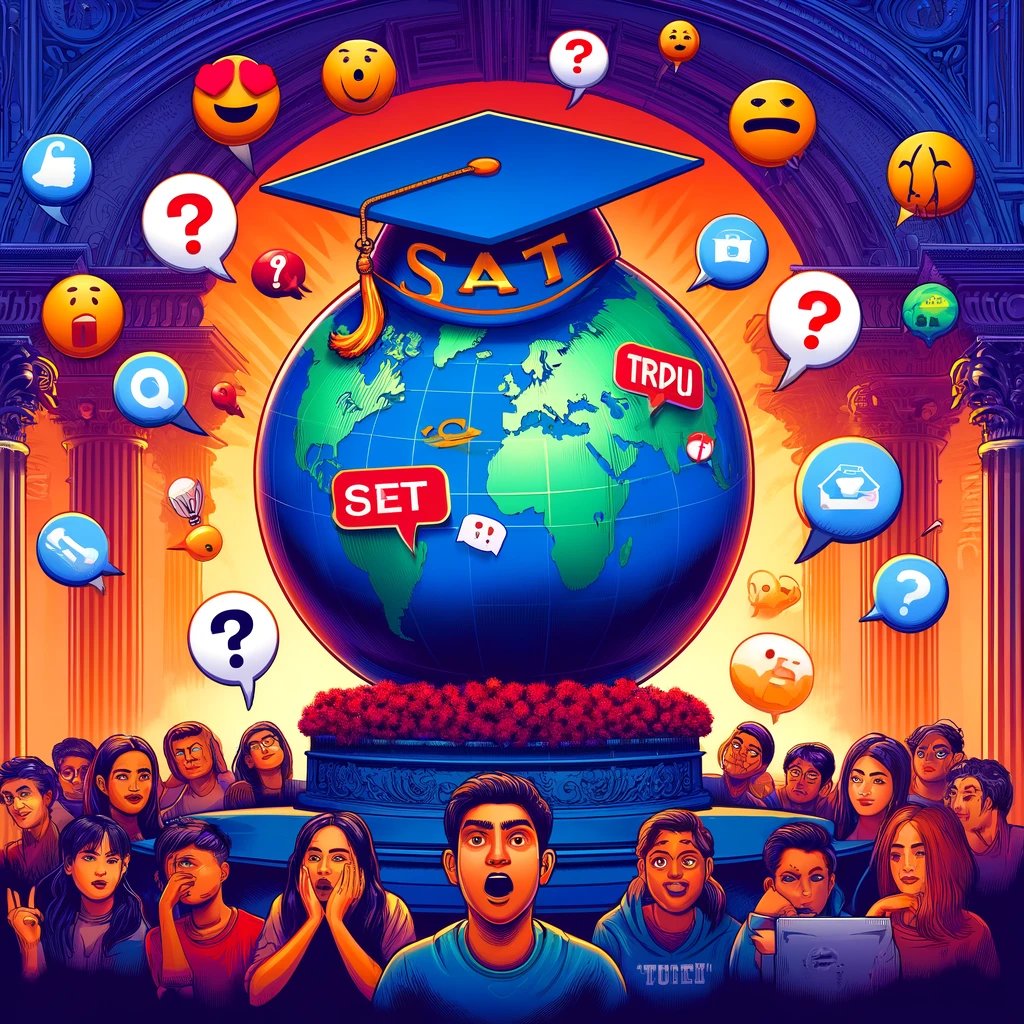
Every year the acceptance rates at highly selective colleges hit a record low. On April 28th, Ivy and Ivy Like colleges extended admission offers to a small set of students from India. Upon learning about their acceptances, students from across the country were also equally surprised to discover that their exceptionally talented friends at school had not been admitted.
What happened? Highly selective colleges found themselves inundated with an ever-higher number of international applications. Without a corresponding escalation in the number of admission readers, there was a notable decrease in the number of students undergoing a thorough evaluation process, coupled with reduced time allocated to review each applicant. So, was that the sole reason for the admission chaos that we all saw in admissions this year? The situation was further compounded by factors such as significant staff turnover, ambiguity surrounding test-optional admission policies, variations in high school performance pre- and post-COVID, the impact of the Supreme Court's rulings on race, and unspoken institutional priorities. In conversation with leading voices from the world of counseling from across India, I've identified the following eight trends.
Trend 1 - Mid Tier Grade Kid Has More Options
Revathi Shivakumar, a prominent South Mumbai IEC, commented – “My high-performing kids have to do ED. Else in most places, they end up on waitlists due to yield protection. Ironically, at the end of it all, middle-tier academic performers are left with more acceptance choices at the end of the cycle today. Of all my years I've been mentoring kids, this might be the most chaotic, frustrating, uncertain college admissions cycle.”
Trend 2 – Test Optional Is Not Test Optional
Colleges use the SAT/ACT to confirm academic abilities, not determine them. They struggle to compare students academically because of heterogeneity within high school academic patterns. Across the Covid period, and after, Abhinav and Monica Garg from SATnPaper have constantly maintained that they saw a distinct difference in admission outcomes between students who submitted and those who did not submit their scores. While admission officers diplomatically promoted the test-optional nature of admissions, and too many school counselors drank this potent Kool-Aid, students were stuck playing the guessing game: to test or not to test. Uncertainty over test-optional admissions policies has compounded stress for families. If the SATnPaper analysis is to go by, test-optional was not really test-optional for the Indian student.
Trend 3 – CS Getting Harder & Capped Majors
Both Urvashi Malik (Founder & Managing Director of CollegeCore Education) and Kim Dixit (CEO and Co-Founder of The Red Pen) felt that the odds for a boy from India of getting into undergraduate Computer Science programs were falling precipitously. Urvashi also observed that more & more universities are capping entry into this major once admitted to college. This has led to a rise in students subscribing to CS-like majors along the lines of Math, Applied Math, Informatics, Data Science, Philosophy, and Physics, amongst others, to pursue their tech dreams.
Trend 4 - The Rise of AP's
Did you know that almost 15 times as many students get over 1400 on the SAT today than in 1984? The AP Scores carry far more information about a student's academic abilities than the SAT score. Brendan Bond, Associate Director of International Admissions at the University of Rochester recently commented – “the most notable trend that I've been seeing over the last year relative to Indian admissions to the US, is students who are already in quite rigorous programs – The Indian boards, IBDP, A levels, are also now wanting to complete AP courses and exams as well, adding pressure to students in an already complicated exam world.” Yet, if trends are to go by, more and more Indian students are poised to take the AP Tests going forward.
Trend 5 - The Rise of Early Applications
According to the CommonApp, in the last five admission cycles, early round apps have gone up by 60%, while regular round apps have gone up by 26%. Nirmal Agarwal, a prominent IEC based in Kolkata and Founder of Cognix India, commented how he is seeing a strong uptake in the number of high student options for applying via the early route to enhance their chance of acceptance. Kim Dixit chimed in to confirm that for her most competitive students targeting the most highly selective colleges, regular decisions had become very unpredictable, especially in those colleges that offer both ED1 & ED2. Contrary to popular opinions about the rise of waitlists in admissions, Iris Medeira from Team Madhavi Desai said - “When Early Decision (ED) and Restricted Early Action (REA) and Early Action (EA), Decisions were released by US Universities in December, a trend we witnessed this year, was that students who were not admitted, were Denied admission, instead of the usual practice of being Deferred to the Regular Decision pool. Every year a large number of Early Applicants are Deferred, but this past cycle. So students need to think very carefully about the University they want to pin their early hopes on.”
Trend 6 - The Rise of Yield Protection
Yield rates, which are a more accurate measure of popularity than acceptance rates especially when students have multiple choices, have dropped significantly at most schools except the most selective ones. Yield is not only a symbol of institutional prestige but also indicates financial stability. With students applying to more colleges, institutions are now focused on predicting which admitted students will actually enroll, and they're adjusting their strategies to attract and retain these students in order to maintain or increase their yield rates. Denver D'Souza from Syracuse University admissions office mentioned that they are increasingly emphasizing demonstrated interest from applicants, such as campus visits, interviews, and virtual interactions, as a way to gauge genuine interest in their institution. Furthermore, Kritika Bagaria, an independent educational consultant from Kolkata, highlighted that in cases where two students have similar profiles, the one who opts for an interview tends to receive more acceptance offers. Curiously, lesser-selective schools have embraced a strategy of increasingly deferring applicants in early rounds to see if they're serious – or even denying them outright when the school thinks it's being used as a backup.
Trend 7 - The Rise of California First
California students graduating in the top 9% of their high school class are guaranteed admission to the University of California. The UCs also attract students from around the world despite tuition costs that are more than double those charged to local residents. So, why was the UC so hard to get into this year for out-of-state students? Answer: Each campus receives some portion of its funding from the state. The State has increased its funding somewhat in exchange for the university admitting more students from California. That leaves fewer seats for those coming from outside the state. The number of non-resident students has declined at most UC campuses, ticking down from 17.7% to 16.3% systemwide over the past two years. Increasing pressure from the Legislature led the state to create a plan in the Budget Act of 2021 to increase the enrollment of locals in the UC system over five years. The system has enrolled more in-state residents – but not enough to meet targets set by the state. State lawmakers are demanding that the UC system make more space for residents – particularly at its most competitive campuses – even if it means charging higher tuition to those who come from out of state.
Trend 8 – Looking Beyond 'merica
With increasing post-Covid economic instability, rising US Dollar to Rupee rate, lack of jobs, election-related uncertainty, and rise in gun and hate crimes, the US seems to be falling out of favor with the Indian parent. While the typical study abroad student remains bullish on pursuing a bachelor's degree in America, many parents are starting to re-think if this is the right time to head to the US. This is fuelling growth in other study-abroad destinations and places such as the UK, and Europe (especially France, Germany, and The Netherlands) have reported greater application numbers from Indian high school students. “We've seen the strongest rise in applicants from India to our summer programs at Oxford and Cambridge this summer compared to any other year in our history. I do believe many of these students would love to return to the UK for their undergraduate education” commented Diya Sharda, Head of Admissions (India) at Summer Boarding Courses (SBC) in London.
Many individuals, including students and parents, commonly hold the misconception that admission to prestigious American higher education institutions is solely based on merit – a belief centered around working diligently on academics, crafting a well-rounded profile, and pursuing passion projects to gain an advantage. The reality is that college admissions are heavily influenced by factors such as institutional reputation, priorities, and enrollment objectives. Given the complexity and dynamism of the college application process and enrollment strategies, both students and counselors increasingly need to game theory thinking in order to secure admissions into highly selective colleges.