From Pomona to Purpose: How Interdisciplinary Learning Launched My Life's Work
Inside the Liberal Arts Classroom That Sparked a Startup and a Mission

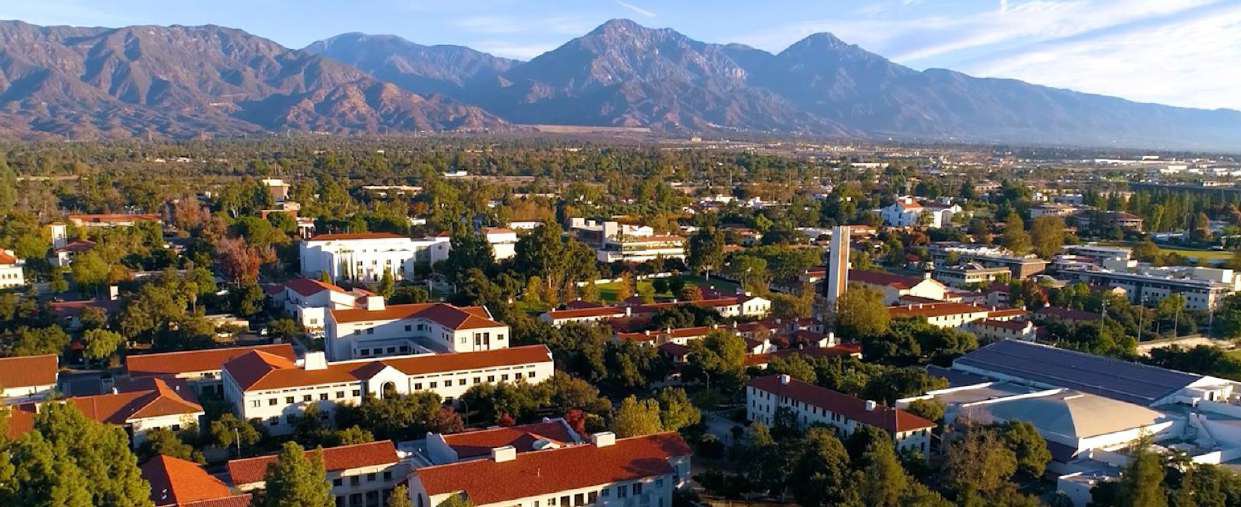
When people ask where my journey as an entrepreneur and educator began, I don't point to my first pitch deck or my earliest startup idea. I point to a classroom at Pomona College, where there were fewer than fifteen students, a whiteboard covered in ideas, and professors who didn't just lecture – he listened.
Pomona wasn't just my college. It was my incubator.
The Power of Small
In a world obsessed with scale, Pomona taught me the power of the small. Small classes where you're not just another body in the room – you're noticed. One morning, I overslept for a seminar. No big deal, I thought. But halfway through what should've been class time, I got a text from my professor:
"Hey Aashna, everything okay?"
It wasn't about attendance. It was about care.
That moment stayed with me. At Pomona, professors weren't gatekeepers – they were mentors who paid attention, who asked questions that extended beyond the syllabus. The intimacy of a 10- or 12-person seminar made space not just for academic rigor, but for human connection. It created a culture where learning was personal – and where showing up, in every sense of the word, mattered.
Daring Greatly (and Weirdly)
I didn't just study across departments – I collided with them. One semester, I found myself rebranding an ice cream parlor's storefront in a class about failing boldly. Another, I staged a performance-art-level social experiment, carrying a friend in a body bag across the village to explore societal discomfort in a course called I Disagree.
Yes, that actually happened.
But the real turning point came when I was selected for a one-of-its-kind co-op program, the Silicon Valley Program. I spent a semester working full-time in Silicon Valley under a billionaire entrepreneur – a Stanford Business School professor and former McKinsey consultant – while Pomona professors in leadership, economics, and systems design flew out every weekend to teach our tight-knit cohort of 12-15 students.
I spent weekdays immersed in high-stakes automation projects and no-code systems, and weekends diving deep into business models and behavioral design - learning from both the boardroom and the classroom, simultaneously.
From Senior Thesis to Startup
By my fourth year, I co-founded a tech company with my psychology professor. What began as a senior thesis in psychology turned into my first startup. In the middle of the COVID lockdowns, it was impossible to visit schools to collect data on child development—every campus had shut its doors. During office hours with Professor Pat Smiley, I asked, “What if I build an app and use it as a research tool for early math education in preschoolers? Can I write my thesis on that?” Pat not only loved the idea—she joined me as a co-founder. Together, we raised capital, eventually securing backing from the former CEO of Google. Our math education app scaled to over 10,000 users within the semester. That thesis? It earned the Senior Award and helped me get a spot at the Harvard Graduate School of Education.
That's the thing about Pomona – professors don't just grade your work. They build with you. That classroom-to-cofounder pipeline could only exist in an environment where hierarchy took a back seat to curiosity, where the classroom wasn't a destination, but a springboard.
We prototyped tools for behavior change, experimented with regression models, debated the ethics of data collection – all while I was still figuring out how to do laundry consistently. It was the most thrilling, terrifying, empowering kind of learning there is.
Why It Still Matters
Today, I run CreatED – an innovation hub where students across India design projects at the intersection of science, tech, and empathy. We've launched AI-powered stethoscopes, emotion-recognition tools for autism, eco-housing prototypes, and policy platforms for workers. Everything we teach – cross-disciplinary collaboration, real-world prototyping, fearless inquiry – traces back to those classrooms in Pomona.
Pomona didn't just give me knowledge. It gave me permission.
Permission to blur the lines between disciplines.
To learn like a rebel and build like a founder.
To treat education not as a path to answers, but as a process of better questions.
That's not just the power of a liberal arts education. That's the power of being seen, stretched, and set free to build something meaningful.