How a Student Should Self-Study for IELTS & TOEFL
8 Proven Strategies for Effective Independent Preparation
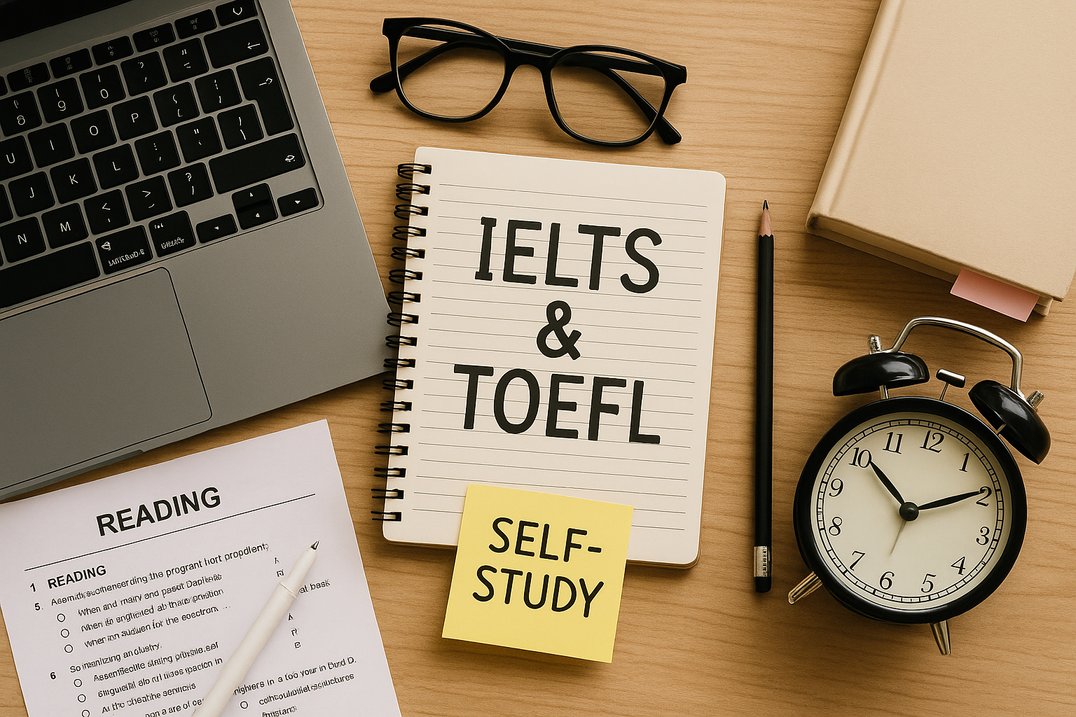
In today's globally competitive academic environment, standardized English proficiency tests like the IELTS and TOEFL are pivotal for students aspiring to study abroad. Whether due to budget constraints, time limitations, or personal preference, many students choose to prepare independently. The good news? With discipline and the right resources, self-study can yield excellent results.
Here's how students can structure their preparation – and how counselors can support them along the way.
1. Understand the Test Format
Before beginning any preparation, students must fully understand what the test involves:
- IELTS has two versions: Academic and General Training. It assesses Listening, Reading, Writing, and Speaking, each scored on a band scale of 1 to 9.
- TOEFL IBT assesses Reading, Listening, Speaking, and Writing, and is scored out of 120.
Encourage students to visit the official websites (ielts.org and ets.org/toefl) and familiarize themselves with question types and scoring rubrics. Watching official sample videos for the speaking sections is especially helpful.
2. Create a Structured Study Plan
Self-study demands organization. A 6-8 week schedule with daily or weekly goals works well for most students. A balanced study plan should include:
- Week 1-2: Focus on understanding the format, completing diagnostic tests, and identifying strengths and weaknesses.
- Week 3-6: Focused practice on weaker sections and regular timed practice.
- Week 7-8: Full-length mock tests under test conditions, review and fine-tuning.
Recommend free or affordable tools like Google Sheets to help students track progress. Encourage a mix of skills practice and mock testing.
3. Use Free and Low-Cost Self-Paced Courses
Many high-quality platforms offer free or budget-friendly courses specifically designed for IELTS and TOEFL preparation. These resources are especially valuable for self-motivated students:
Free Platforms
- FutureLearn (by British Council) – Free IELTS preparation courses covering all four skills.
- edX TOEFL Test Prep by ETS – Free, self-paced TOEFL course with the option to upgrade for a certificate.
- Magoosh YouTube Channels – Extensive free video lessons and tips for both tests.
- IELTS Liz / TOEFL Resources – Free blogs and video guides offering strategies and practice exercises.
- Duolingo English Test Practice (Free) – While it's a different test, many of its skills overlap with IELTS/TOEFL, making it a good supplementary tool.
Low-Cost Books
- Cambridge IELTS Books (11-18) – Available for under ₹500–₹700 each in India.
- Barron's TOEFL iBT and Kaplan TOEFL Prep – Affordable and available as used books or e-books.
- Collins English for IELTS Series – Great targeted practice books, each focused on one skill.
4. Choose the Right Study Resources
There is no shortage of prep material, but students need quality over quantity. In addition to the free/low-cost options above:
For IELTS
- British Council practice tests
- IELTS Simon eBook (free samples available)
For TOEFL
- ETS TOEFL Go! App
- Notefull's free YouTube speaking tutorials
Emphasize the importance of focusing on official or well-reviewed resources to avoid misinformation or low-quality content.
5. Master the Four Skills
- Listening: Use podcasts like BBC Learning English, 6-Minute English, or TED Talks with transcripts.
- Reading: Daily reading from sources like The Economist, Smithsonian, and Science News for Students helps improve comprehension.
- Speaking: Use free apps like Voice Record Pro to record and critique responses. Practice with a partner or join online language exchange platforms like Tandem.
- Writing: Practice with free prompts from IELTSbuddy and TOEFL Essay Topics (ETS). Use Grammarly (free version) or Hemingway App for basic feedback. Suggest alternating between skill-specific and integrated tasks each week to simulate real test conditions.
6. Simulate Real Test Conditions
Mock testing is crucial to develop stamina and manage anxiety. Students should:
- Take at least 3-4 full-length tests before their actual exam.
- Time themselves strictly.
- Avoid distractions – no breaks unless the test allows it.
Recommend free test PDFs or practice portals from British Council, IDP, or ETS for authentic practice.
7. Self-Review and Feedback Loop
Without a teacher, self-review becomes vital.
- Encourage students to keep an error log: noting down mistakes and reviewing them weekly.
- Use rubrics from IELTS/TOEFL websites to self-assess writing and speaking. Compare with model answers.
- Encourage regular review of weak areas instead of blindly doing new practice.
Even if you're not directly tutoring, offering brief check-ins or helping evaluate one writing or speaking task per week can be immensely helpful.
8. Mindset and Consistency
Self-study success lies in discipline, motivation, and resilience. Remind students:
- It's okay to make mistakes – they are stepping stones to improvement.
- Short, consistent daily practice (even 60–90 minutes) is better than long, irregular sessions.
- Test scores often improve significantly between first and second attempts.
Conclusion
While students may choose to self-study, counselors remain crucial facilitators of this journey. From recommending free resources and setting realistic timelines to offering accountability and encouragement, your role makes a difference. With structured planning, cost-effective tools, and a mindset geared toward consistent improvement, students can absolutely excel in the IELTS or TOEFL – even through self-study.