How Much Do You Know about Imperial College London?
7 Lesser Known Facts about Imperial

Imperial College London is the UK's only university focused solely on science, technology, engineering, medicine and business. It's world-leading – ranked second in the world by QS World University Rankings 2025 – and based in the world's best student city (QS Best Student Cities 2025).
Imperial is famous for its research, its impact and its people. Sir Alexander Fleming discovered penicillin while he was working at Imperial's St Mary's Hospital Medical School in 1928. Nobel Laureates like Professor Abdus Salam and Sir Andrew Fielding Huxley worked here. And rock legends Queen had their first gig at Imperial's students' union.
But what about the parts of Imperial life that are less well known? Here are seven facts about Imperial you probably didn't know.
1. Imperial is the University Challenge Champion of Champions
Imperial has won the long-running BBC quiz show five times – more than any other university in the programme's 60-year history. The Imperial team's most recent win came in 2024 against UCL, with a top score of 285 points.
2. Imperial's Mascots Usually Need Their Own Parking Space
When Imperial was formed in 1907, it brought together a number of existing scientific and engineering institutions. Today, these institutions form Imperial's five constituent students' unions and are integral parts of the university's students' union, Imperial College Union.
Although long a part of Imperial, the constituent unions' history and traditions live on through a wide and unusual collection of mascots, including some very old vehicles. There's Bo, an early motor car built in 1902 owned by the Royal College of Science; Clementine, the 1926 truck looked after by the Royal School of Mines; and City and Guild's Jezebel, a former London fire engine built in 1916. Students from the unions maintain and run the vehicles, often taking them for a spin around the university's South Kensington Campus.
3. Imperial Students Can Practise Lab Skills in the Kitchen
The Chemical Kitchen is a pioneering project started by Imperial's Department of Chemistry to help new undergraduate students learn useful lab skills in a familiar environment. To create culinary masterpieces like deep-fried egg yolks, tea spheres and faux caviar, students not only get the chance to plan and execute a complex recipe where measurement, temperature and timings are key, but also try out lab apparatus, like rotary evaporators and centrifuges. Since its launch in 2019, the Chemical Kitchen has expanded to help medical students in clinical training learn culinary knife skills and is supporting bioengineering students to work in a sterile way and handle delicate materials.
4. Imperial Researchers Study Biodiversity and Ecology in its Outdoor Laboratory
Imperial's Silwood Park Campus is a world-leading centre for research into ecology, evolution and conservation based just 25 miles from central London in the beautiful Berkshire countryside. With 77 hectares of green space, Silwood Park has been used for nearly a century to study the natural world. Today, the campus is home to researchers and postgraduate students studying all aspects of life on Earth, from soil microbes and tropical forest trees to freshwater ponds and coral reefs.
5. Imperial Students Can Graduate at One of the World's Most Famous Venues
For more than 70 years, Imperial's graduation ceremonies have taken place at the Royal Albert Hall. The Hall, which has hosted a whole galaxy of stars – from Bob Dylan and the Rolling Stones to Frank Sinatra, Coldplay and Ed Sheeran – is just across the road from the university's South Kensington Campus.
6. Imperial Students Can Make Their Ideas a Reality at the Advanced Hackspace
The Advanced Hackspace is Imperial's prototyping hub. Based at Imperial's White City Campus, it's where students can learn cutting-edge design and making skills, and use its electronic and digital manufacturing facilities, wood and metal workshops and bio lab. The Hackspace's annual innovation programme, Hackstarter, also gives students the chance to develop their prototypes and get specialist support from expert makers.
7. Imperial Has Its Very Own London Landmark
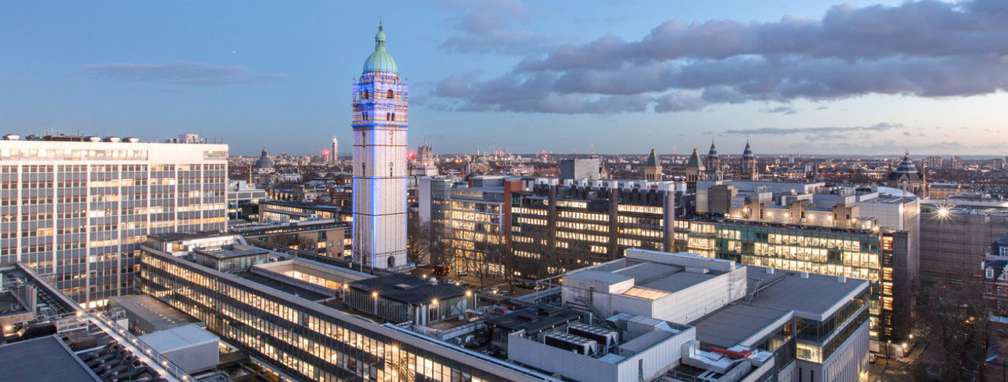
At the centre of Imperial's South Kensington Campus is the Queen's Tower. It's the last remaining part of the Imperial Institute, built to mark Queen Victoria's Golden Jubilee in 1887. In 1953, plans to demolish the Institute buildings were announced, but the Queen's Tower was saved thanks to a campaign by the then Poet Laureate, Sir John Betjeman. At the top of the Tower are ten bells – each named after a member of Queen Victoria's family – that are normally rung to mark royal anniversaries. Today, restoration work is ongoing at the Tower to repair its stonework and copper roof and is expected to be complete in 2026.