The Most Common Mistake High School Students Make Finding a Research Lab
The Key to Securing High School Research Lab Positions

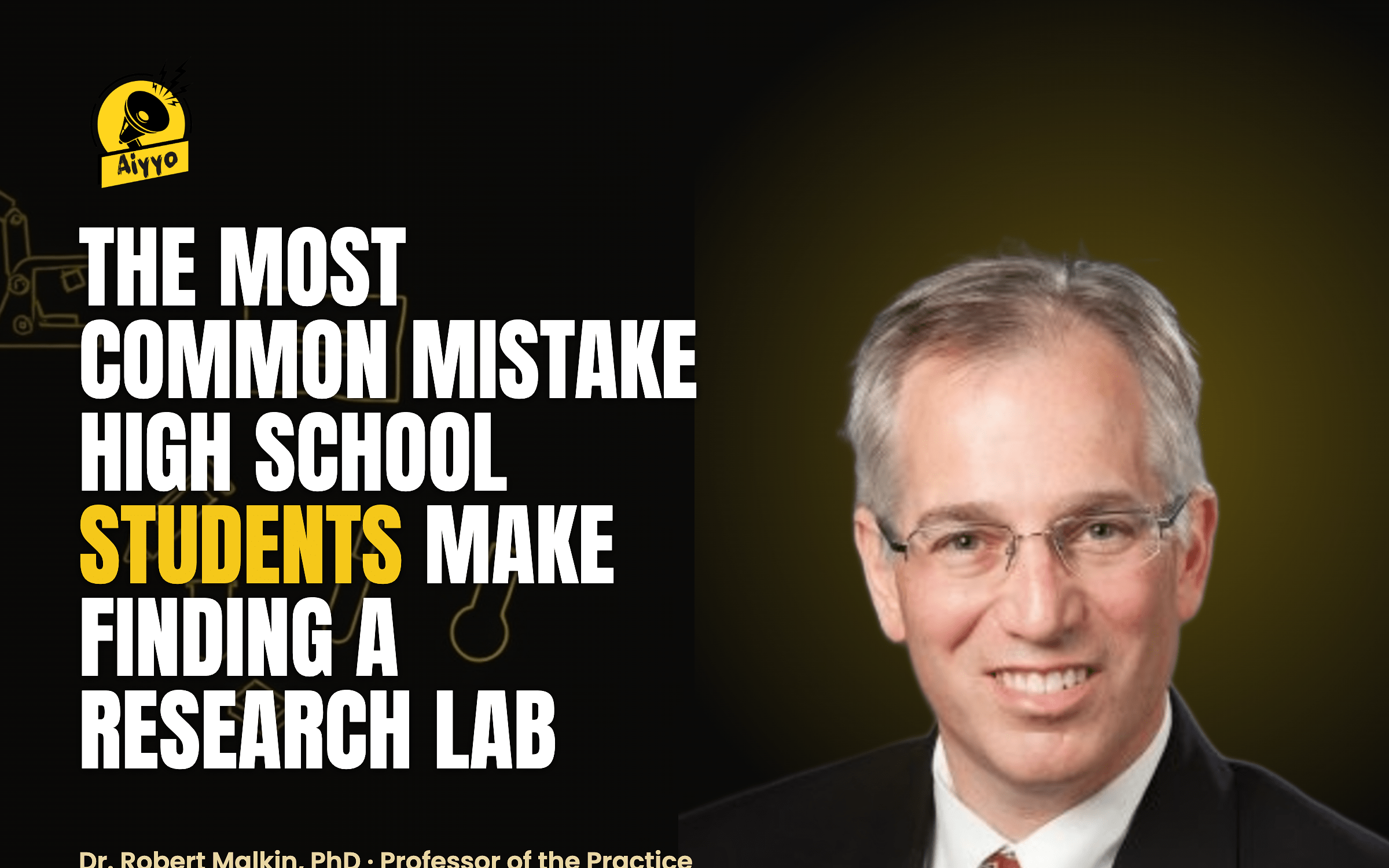
High school students are looking for academic research laboratory positions in unprecedented numbers. This is probably because a research experience can have a major impact on a college application. While these positions can be challenging to find and competitive to obtain, the chances of landing a position can be markedly increased by avoiding the one, most common mistake that high school students make when searching for a research lab: Do not start by writing an email with lists of accomplishments. Instead, start by finding your passion.
Faculty do not choose high school students for their lab primarily because of their accomplishments. In fact, showcasing your accomplishments can reduce your chances of success. A Professor does not expect a high school student to come to the lab with a well-developed skill set. Rather, faculty are interested in high school students who have a passion for their area of research. They want to share their love of science and their specific domain. So, the first step in finding a lab is figuring out what you are passionate about.
You certainly have an interest in science, or you wouldn't be looking for a lab job. But, is your interest a passion? To make sure you have a passion, and not just an interest, read a few issues of a scientific journal in your area of interest. Or use a general interest science journal like Nature or Science. Do any of the articles seem intriguing? If you don't understand everything you are reading, don't panic. As you read, write down what you don't understand. If you have multiple areas of interest, write down the things you don't understand for each one on separate lists. If you reach 30 or 40 questions about one topic, you have probably found an area of science that could be a passion for you.
Now that you have a passion defined, you can work on that email. Keep the email to no more than a few very short paragraphs; ideally only two.
Do not start with a list of your accomplishments, your GPA, or your awards in the first paragraph. This is a risky strategy because you are assuming that your list is superior to all the others received by that faculty that day. Also, in this world of inflated CVs, you are also assuming that the faculty member reading your email will believe you. Moreover, your list of accomplishments has little bearing on your chances of getting the lab position. Remember that faculty are mostly interested in students who share their passion. They don't expect a high school student to come to the lab with specific skills. The skills and accomplishments you list probably don't apply directly to their lab anyway.
Instead, lead with your passion. Your first paragraph should introduce yourself and where you got their name, leading into a discussion of your shared passion. This is your chance to show that you have spent time thinking about the field of inquiry and reading journal articles. Ideally, mention a specific, recent publication from your readings or work from the target lab that you have read about.
The second paragraph is your ask. You can mention that you are looking for a lab position, but your main request is for an interview. Ideally, you can say that you will be on campus on a particular day and would like to meet. It is even better if you propose a particular time window and even perhaps a location, like their office.
Now, you can send that short, passion-filled email to as many lab directors and faculty as you can. If you want to learn about the next steps in finding that perfect lab spot, and how to make the most of the lab job when you have it, please look for my book “A Guide to Academic Research."
It can be very challenging to find a lab position. You can increase your chances of landing one of these coveted jobs by avoiding the most common mistake: Start with your passion, not your accomplishments.