KUAS Japan: A Surprisingly Practical Route into Japan for Indian Students
You Can Study in Japan Without Studying in Japanese
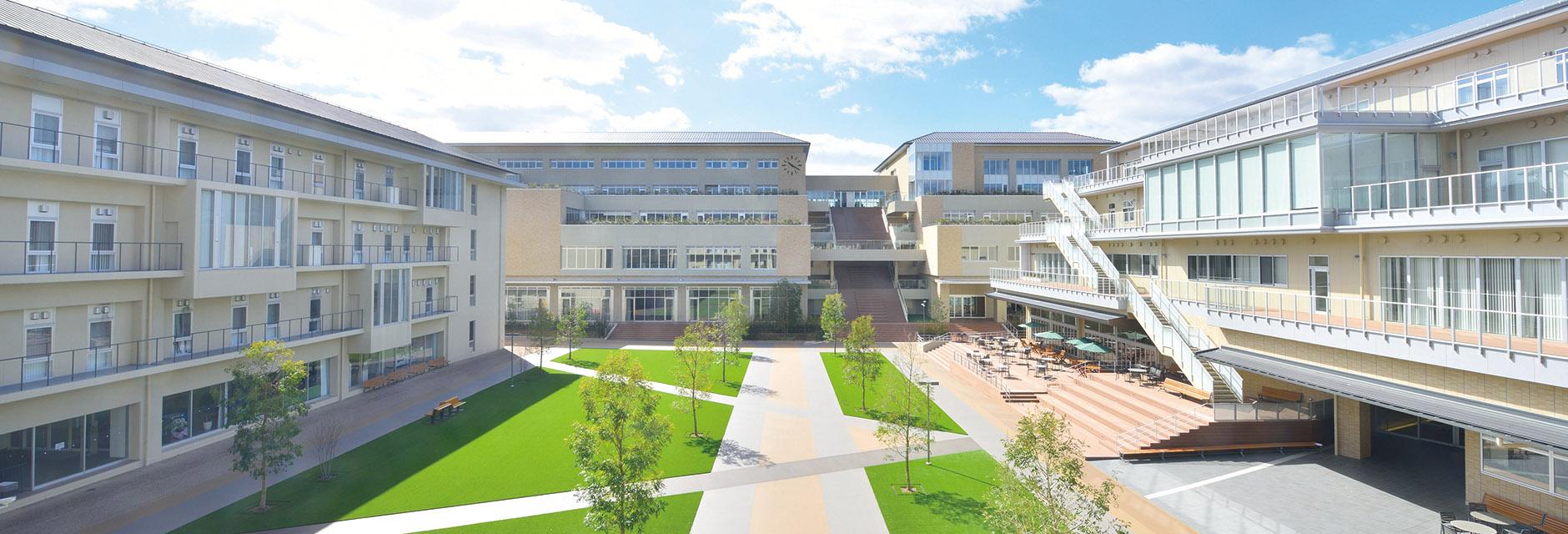
Indian families exploring Japan beyond its handful of famous national universities, Kyoto University of Advanced Science (KUAS) deserves attention. It is particularly interesting for students who want an English-medium education but also want to build sufficient Japanese fluency to enter Japan’s formidable engineering, technology, biotechnology and corporate ecosystem.
First, an important distinction: KUAS is not Kyoto University, Japan’s celebrated national research university. Consequently, statistics about Kyoto University’s Nobel laureates should not be attributed to KUAS. Kyoto University reports 13 Nobel laureates among its alumni and faculty as of 2026.
KUAS currently offers three four-year English-taught undergraduate options for international students. Engineering is formally a BEng in Mechanical and Electrical Systems Engineering, rather than separate degrees in mechanical, electrical, robotics and AI. Its interdisciplinary curriculum nevertheless reaches into robotics, mechatronics, electronics, programming and intelligent systems, culminating in year-long capstone projects based on real problems supplied by industry partners. Around 40 companies contribute projects annually.
The Bachelor of Bioenvironmental Sciences is unusually interesting for students straddling biotechnology, agriculture, food science, environmental science and sustainability. Students can pursue Environmental and Bioresource Sciences or Applied Biological Sciences, with work spanning genetics, food engineering, plant metabolism, ecology and agricultural systems. The third option, the BBA Global Business and Economics, combines economics with finance, strategy, marketing and entrepreneurship rather than forcing students into an early economics-versus-management choice.
The university's strongest differentiator is practicality. KUAS offers credit-bearing internships in Japan and overseas, including placements across manufacturing, agriculture, government and business; more than 170 domestic placements are available through its general internship programme. In 2025 alone, 52 international students interned with Japanese companies.
For the September 2027 intake, applications open on October 1, 2026 and close February 26, 2027, although programmes can close once capacity is reached. Decisions normally arrive within one to four weeks. Applications are online and primarily document-based, including academic records, testing and a 300–350 word application essay; an interview may occasionally be requested. Predicted CBSE, ISC and IB results are accepted.
Japanese is not required for admission. Minimum English requirements include IELTS 6.0, TOEFL iBT 80 or Duolingo 120, subject to waiver provisions. Engineering applicants need strong mathematics and physics; Bioenvironmental Sciences expects biology or chemistry; Business expects mathematics or substantive economics/business preparation.
For 2027, first-year fees are ¥2.2945 million for Engineering and Bioenvironmental Sciences and ¥1.8515 million for Business, roughly US$15–16,000 and US$12–13,000 respectively depending on exchange rates. KUAS scholarships are considerably more generous than the representative notes suggest: awards range from 20% to 100% fee reductions, while the exceptional Super KUAS-E Scholarship covers admission and school fees and provides a ¥1.2 million annual living stipend.
Kyoto is manageable financially by Japanese metropolitan standards. KUAS dormitories currently cost approximately ¥29,000–¥63,000 per month including utilities, although accommodation is not guaranteed. Additionally, international students may work up to 28 hours weekly during term. For Indian applicants, there is already a meaningful community: KUAS reported 77 Indian undergraduates and eight Indian graduate students among 730 international students in Fall 2025. After graduation, students who have not yet secured employment can ordinarily switch to Japan’s “Designated Activities” status for six months, renewable once, allowing up to a year of continued job hunting; certain candidates may qualify to continue longer.
KUAS is therefore not the right choice for a student chasing prestige rankings alone. Its proposition is different: English-medium education, serious Japanese-language acquisition, applied learning and a deliberate bridge into the Japanese employment market. For an Indian student genuinely interested in building a life or career in Japan, that’s a superb combination.