Mastering Knowledge: Dive Deep with Cornell College's Block Plan
One Course At A Time Approach

Cornell College – One Course At A Time
Cornell College, a small liberal arts college located in Mount Vernon, Iowa, has a long tradition of innovative thinking. The best example is Cornell's adoption of the One Course At A Time academic calendar in 1978. Since then, faculty and students have enjoyed the powerful benefits of immersive study on the block plan schedule.
How does One Course At A Time work
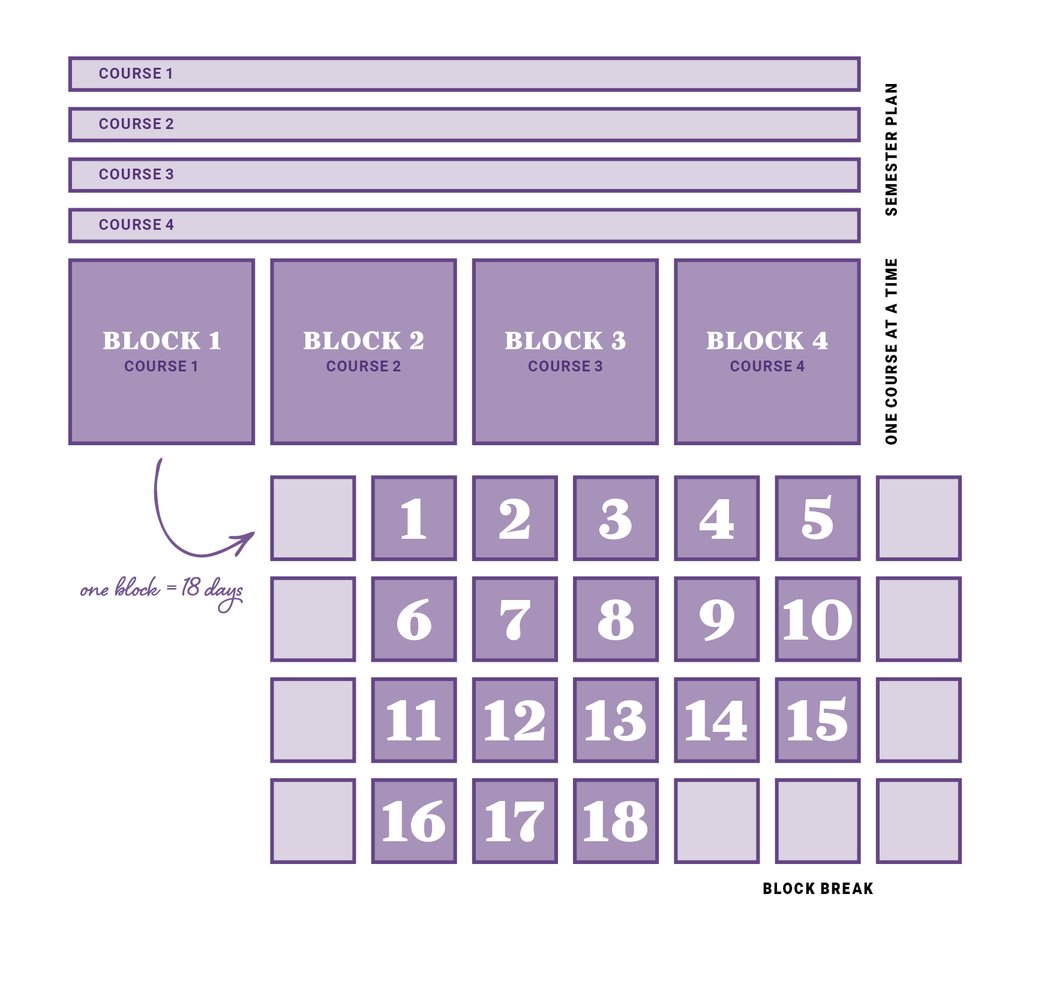
Students dedicate themselves to one 18-day course each block. There are four blocks each semester for a total of eight blocks during the academic year. Courses meet on weekdays, typically for three to four hours with scheduled breaks. By eliminating the disruptions of moving between classes and resetting workspaces that occur on a semester schedule, students at Cornell can dive deep into their subject matter without interruptions. Block courses conclude with a final exam or culminating paper or project submitted on the final day of class. A four-day weekend, known as a "block break,” is scheduled between blocks as a way for students to rest and recharge before their next course.
Cornell courses are valued at four credit hours, so students earn credit at a similar pace to their peers at institutions with semester calendars. With a focus on personalized academic advising, 91% of Cornell graduates completed their degree in four years.
Why is One Course At A Time a great way to learn
The One Course At A Time block schedule offers students the opportunity to focus on a single area of study without the distraction of other classes. Professors share this singular focus in that they only teach one course at a time. As a result, the classroom environment becomes a close-knit learning community where meaningful and long-lasting relationships develop. The average class size at Cornell is 16 students with a maximum capacity of 25 students. Together, students and professors take the time to tackle subjects and engage in discussion without the need to end class at a specific time.
Faculty utilize the flexibility of the block schedule to enhance the immersive experience through hands-on activities, extended labs, field trips, and off-campus study. A class may watch a film in the morning and discuss it in the afternoon. An art course can visit a local museum. Engineering students can tour a water treatment plant. Students can travel with their class to study economics in Shanghai, China. Month-long internships that feel like full-time jobs and research opportunities supplement students' classroom experiences. Through in-depth study in their courses and a wide range of internship and off-campus study experiences, students quickly identify where their interests lie. While students register for courses up to a year in advance, the block calendar allows students to pivot and change their schedule at any time during the semester. Half of Cornell students graduate with a double major or a major and a minor.
Cornell graduates report that the block schedule provides excellent preparation for the pace and demands of both graduate studies and employment. Through the One Course At A Time block schedule, students learn to master tight deadlines and high expectations.